Specifications
| Spec | Detail |
|---|---|
| Capacity | 2 gallons (7,600 ml / labeled 7600ML) |
| Material | Glass |
| Mouth style | Wide mouth |
| Lid | Airtight lid included |
| Airlocks | 2 airlocks included |
| Volume markings | Clear scale marks printed on jar |
| Stated uses | Wine making, pickling, home brew, kombucha, cider, beer |
| Price | $29.99 (verify current price on the listing) |
| Exact dimensions / weight | Not stated by the manufacturer |
| Glass type (annealed vs. borosilicate) | Not stated by the manufacturer |
| Lid material and gasket | Not stated by the manufacturer |
| Dishwasher / heat safety | Not stated by the manufacturer |
| Warranty | Not stated by the manufacturer |
Last Updated: August 2, 2026
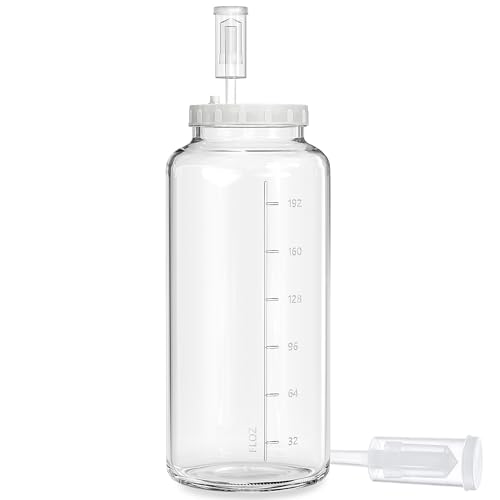
- With 4.3” Wide Opening And Scale Mark: The wine-making kit has a 4.3” wide opening, is easily put in your pickled food and cleaned it by hand effortlessly. In addition, this
- 100% Sealing Screw On lid: The sealing lid with a gasket and a hole plug ensures optimal tightness and functionality. The hole plug design even facilitates fermentation with an
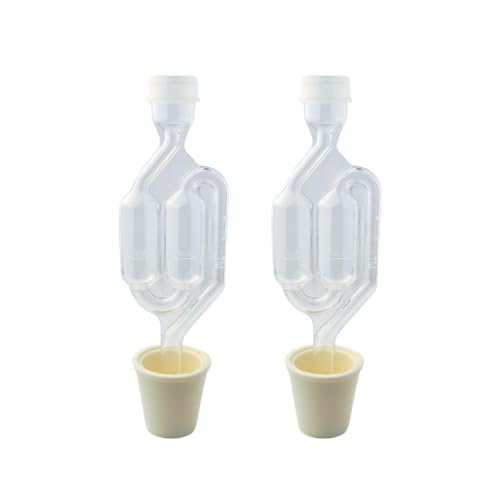
- WHAT'S INCLUDED: With this purchase, you'll receive two twin bubble airlocks and two universal-fit carboy bungs for managing fermentation of beer, wine, mead, or kombucha
- EASY & SIMPLE TO USE: Insert the assembled airlock into the hole of the rubber stopper that fits your current jug or carboy. Fill the Bubbler Airlock with water and insert the
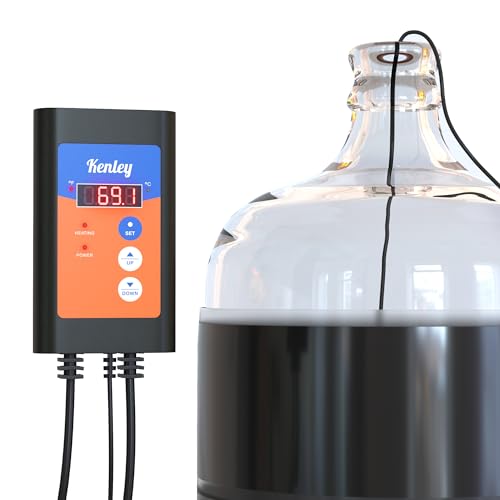
- PERFECT TEMPS, PERFECT BREWS - Whether you're brewing kombucha, wine, mead or beer, the Kenley fermentation heater comes with a temperature controller that allows you to set and
- EASY TO USE - The Kenley kombucha heating wrap is flexible and easy to fit snugly against the carboy. The 32 x 11-inch film simply wraps around the fermenter and is secured with
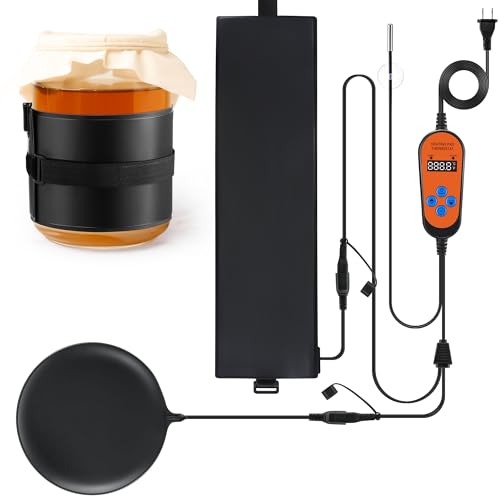
- Versatile Fermentation Solution: Ensure optimal growth for your kombucha, sourdough starter, kefir, yogurt, and vegetables with this 2 pack kombucha heating pad set Designed to
- Precision Control & Flexibility: The fermentation heating pad take full control of your fermentation environment with the integrated digital temperature controller and adjustable
The Short Version
This is a 2 gallon (7,600 ml) wide-mouth glass fermentation jar that ships with an airtight lid, two airlocks, and clear volume scale marks printed on the glass. It fits home fermenters who want a single generous vessel for kombucha, cider, wine, beer, or even bulk pickling without buying a narrow-neck carboy. The biggest trade-off is heft and fragility: a full 2-gallon glass jar is heavy, breakable, and needs its own temperature and cleaning discipline that the jar itself does not provide.
The best 2 gallon glass review for your situation depends on how you plan to use it and where.
What This Jar Actually Is
The product is a single, large-format glass fermentation jar sized at 2 gallons, which the manufacturer lists as 7,600 ml (labeled 7600ML in the product name). It has a wide mouth, which is the defining feature here compared to a traditional narrow-neck carboy. The wide opening means you can get a hand, a scrubbing brush, or a whole SCOBY inside without fighting the geometry.
It comes as a kit rather than a bare jar. The listing specifies an airtight lid plus two airlocks, so you have the parts needed to run an active, sealed ferment out of the box. Clear scale marks are printed on the side, which is a practical touch for anyone who batches recipes by volume and wants to hit a target fill line without a separate measuring jug.
The manufacturer positions it broadly: wine making, pickling, home brew, kombucha, cider, and beer. That wide framing is honest to the design. A large wide-mouth glass jar with a sealing lid and airlock ports is genuinely a general-purpose fermentation vessel, and the same jar that holds a kombucha batch this week can hold a cider must next week.
The wide mouth is the headline feature
Narrow-neck glass carboys are notoriously awkward to clean; you end up relying on soak-and-swirl or specialized brushes. A wide mouth changes the ergonomics entirely. For kombucha specifically, where you are periodically adding and removing a gelatinous culture, the wide opening is close to a requirement rather than a luxury.
Everything above the horizontal break is drawn directly from the product name and listing data. Where the listing is silent, we have marked it as not stated rather than guessing. If any of those blank fields matter to your build, confirm them on the live listing before you buy, because generic glassware listings frequently update their spec bullets.
Who It's For
Batch kombucha brewers who have outgrown a 1-gallon jar
If you drink kombucha regularly, a 1-gallon vessel forces a brew-day almost every week. A 2-gallon jar roughly doubles your batch, which halves how often you have to sweeten tea, cool it, and manage the culture. The wide mouth makes transferring the SCOBY and pouring off finished tea manageable.
Cider and small-batch wine makers who want to watch the ferment
The included airlocks and airtight lid mean you can run an anaerobic primary or secondary ferment and see active CO2 bubbling. Two airlocks in the box is thoughtful, because airlocks are cheap, easily lost, and easily clogged; having a spare on hand is genuinely useful.
Recipe-driven brewers who batch by volume
The printed scale marks suit anyone scaling a recipe. Being able to fill to a marked line instead of measuring with a separate jug speeds up brew day and reduces one point of contamination risk from extra tools.
Bulk picklers and lacto-fermenters
The manufacturer lists pickling as an intended use, and a wide-mouth 2-gallon jar is a sensible size for a big crock-style batch of sauerkraut, pickles, or other lacto-ferments where you need room to submerge and weight the vegetables.
Who Should Skip It
Anyone who needs a lightweight, drop-proof vessel
This is glass, and a full 2-gallon glass jar is heavy and breakable. If you move your ferment between rooms, share a small kitchen, have curious pets or kids, or simply dislike handling heavy glass, a food-grade plastic fermenter or a smaller jar will be less nerve-wracking.
People who only ever brew one gallon
If a gallon lasts you two weeks, the extra capacity is dead weight. A larger jar takes more counter space, more shelf height, and more sweetened tea or must to fill properly. Fermenting a small volume in an oversized jar also leaves a lot of headspace, which is not ideal for some wine and cider stages.
Brewers who need documented food-safety or heat certifications
The listing does not state the glass type, dishwasher safety, or any certification. If your use case demands verified borosilicate, boiling-water safety, or a specific standard, this is not the product to assume those from. Buy something with those specs explicitly documented.
Honest Trade-offs at This Price
You are buying a vessel, not a system
At $29.99 you get the jar, lid, and two airlocks. You are not getting temperature control, a heat source, a stand, or a spigot. Fermentation is temperature-sensitive, and this jar does nothing to hold a target temperature. If your space runs cold, budget separately for a heating solution (see the alternatives below).
Fragility and weight are inherent to glass
Glass is inert, non-reactive, does not stain, and does not hold odors, which is exactly why fermenters like it. The cost of those benefits is that it can crack from thermal shock and shatter if dropped. Because the listing does not state the glass type or heat tolerance, treat it as ordinary glass: no boiling water poured into a cold jar, no oven, no freezer.
Airlock and lid quality are unknowns
Included airlocks and an airtight lid are convenient, but the listing does not describe the gasket material or the airlock design in detail. Cheap airlocks can clog or dry out, and lid gaskets vary in how well they seal over time. These are inexpensive to replace if the included parts disappoint, so it is a minor risk rather than a dealbreaker.
Two gallons is a commitment of ingredients
Filling this jar means brewing roughly two gallons of tea, must, or wort each time. That is more sugar, more tea, more fruit, and more time per batch. The efficiency gain of fewer brew days comes with a larger per-batch input.
What to Check Before You Buy
Confirm the capacity and variant
The name lists 2 gallons and 7,600 ml. Glassware listings sometimes offer multiple sizes under one product page, so confirm you are selecting the 2-gallon variant and not a 1-gallon or 3-gallon option at checkout.
Verify what is in the box
This listing states an airtight lid and two airlocks. Kits change. Check the current bullet points and images to confirm the airlock count and whether any bung or grommet is included, since an airlock needs a matching hole or grommet in the lid to function.
Check price, warranty, and returns
The $29.99 figure here is a snapshot. Prices on Amazon move, and the listing may or may not state a warranty (it currently does not). Read the current price, the return window, and any manufacturer warranty on the live page before ordering.
Look for glass type and heat-safety notes
Because the glass type and heat tolerance are not stated in the data we have, check whether the current listing or Q&A section clarifies them. If you plan to sanitize with hot water, that detail matters. When in doubt, sanitize with a no-rinse chemical sanitizer instead of boiling water.
Read the reviews yourself
This particular listing does not have enough ratings to summarize meaningfully, so go read whatever reviews exist directly on the Amazon page and judge them yourself. Pay attention to any comments about breakage in shipping, lid seal quality, and airlock fit, since those are the failure points that matter most for a glass fermentation kit.
Consider Instead If...
If you just need better or backup airlocks
If your main concern is airlock reliability, or you want spares for multiple jars, a dedicated airlock pack like the Fastrack Twin Bubble Airlock and Carboy Bung 2-Pack ($5.99) is a cheap way to keep proven airlocks on hand.
If your room runs cold
This jar has no temperature control. A wrap-style heater such as the Fermentation Heater Carboy Warmer with thermostat ($54.98) is designed to fit vessels in the 2-to-8-gallon range and adds the temperature stability the jar itself lacks.
If you want a smaller, mat-style heater with a timer
For a lower-cost heating option sized to 1-to-3-gallon vessels, the 2-pack kombucha heating pad with digital temperature and timer ($36.99) pairs well with a jar this size if you prefer a mat under or beside the vessel.
Setup and Care Notes
Sanitation comes first
Any fermentation vessel lives or dies by sanitation. Wash the jar, lid, and airlocks thoroughly, then sanitize before every batch. Because the wide mouth makes physical scrubbing easy, this jar is more forgiving to clean than a narrow carboy, but that only helps if you actually reach into it and clean the whole surface.
Mind thermal shock
Treat this as standard glass unless the listing says otherwise. Let the jar reach room temperature before adding warm liquid, and never move it straight from cold to hot. Thermal shock is the most common way home fermenters crack a good jar.
Give the airlock the right water level
Fill the airlock to its marked line with sanitizer solution or water, and check it periodically so it does not dry out during a long ferment. A dry airlock stops protecting your ferment. Having the second included airlock means you can swap in a clean one without pausing your batch.
Store it safely between batches
Empty glass this large is still fragile. Store it where it will not get knocked, ideally low and stable, and keep the lid loosely on to keep dust out without trapping moisture.
FAQ
How big is this jar, really?
The manufacturer lists it as 2 gallons, or 7,600 ml. That is roughly double a standard 1-gallon kombucha jar, so plan to brew about two gallons of liquid to fill it appropriately.
Does it come with everything I need to ferment?
It includes the glass jar, an airtight lid, and two airlocks. It does not include a heat source, temperature controller, spigot, or sanitizer, so budget for those separately if your process needs them.
Is the glass borosilicate or safe for boiling water?
The listing does not state the glass type or heat tolerance, so we cannot confirm it. Treat it as ordinary glass, avoid pouring boiling water into a cold jar, and use a no-rinse sanitizer if you are unsure. Check the current listing for any updated heat-safety notes.
Can I use it for pickles and sauerkraut, not just drinks?
Yes. The manufacturer explicitly lists pickling among the intended uses, and a wide-mouth 2-gallon jar is a practical size for larger lacto-fermentation batches where you need room to submerge and weight vegetables.
Will the included airlocks fit the lid?
The kit pairs the lid and airlocks together, but an airlock needs a matching hole or grommet to seal. Confirm on the current listing images and Q&A that the lid is set up to accept the included airlocks before you rely on it for an anaerobic ferment.
Is it worth $29.99?
For a 2-gallon wide-mouth glass jar bundled with a lid and two airlocks and printed scale marks, the price is reasonable for a general-purpose vessel. Whether it is worth it for you depends on whether you actually brew in 2-gallon batches and can handle heavy, breakable glass. Confirm the live price before ordering, since it can change.
How do I clean a jar this large?
The wide mouth is the main advantage here: you can reach inside with a hand or brush rather than relying on soak-and-swirl. Wash thoroughly and sanitize before each batch, and be gentle to avoid thermal shock during cleaning.
The Bottom Line
The 2 Gallon Glass Jar with Airtight Lid and two airlocks is a straightforward, general-purpose fermentation vessel that does the fundamentals well: inert glass, a genuinely useful wide mouth, printed scale marks, and the airlock hardware to run a sealed ferment out of the box. It suits home fermenters who have outgrown a 1-gallon jar and want one flexible vessel for kombucha, cider, wine, or pickling.
The compromises are the ones inherent to large glass at a modest price: it is heavy and breakable, it provides no temperature control, and several specs (glass type, dimensions, warranty) are simply not stated in the listing. If you can work around those, and you verify the variant, price, and box contents on the live page, it is a sensible pick. For temperature stability, pair it with one of the heating options above; for airlock reliability, keep a spare pack on hand.
For safety information on kitchen and household products in general, you can consult the U.S. Consumer Product Safety Commission recalls page.
Key Takeaways
- Choosing the right 2 gallon glass review means matching the key features to your specific needs and budget
- Read real customer reviews and check the return policy before you commit
- Also covers: 2 gallon fermentation jar
- Also covers: wide mouth glass jar airlock
- Also covers: kombucha brewing jar
- Compare value across models — the priciest option is not always the best fit