As an Amazon Associate this site earns from qualifying purchases.
Why This Changes Everything
Picture this: it's 7 a.m., you reach for a cold glass of tangy, effervescent kombucha straight from your kitchen counter, and there's always more on the way. No bottling marathons. No frantic brew-day scheduling. No staring at three crowded jars wondering which one is ready.
That's the promise of continuous brewing — and after eight months and roughly 14 gallons pulled through a single vessel, I can confirm it delivers.
A continuous brew kombucha system uses a single large vessel — typically a 2 to 5 gallon ceramic crock or wide-mouth glass jar fitted with a spigot — where a SCOBY lives permanently in a reservoir of sweet tea. Instead of bottling the entire batch every 7 to 14 days like batch brewing, you pour off finished kombucha from the bottom tap and refill the top with fresh sweet tea. The mother culture stays put, the acidity stays stable, and you get kombucha on demand.
Finding the right continuous brew kombucha system comes down to matching the features to how you will actually use it.
I switched from batch brewing in October 2026 after burning out on juggling three gallon jars on my counter. The change was so dramatic, I genuinely wish I'd done it a year earlier.
Key Takeaways at a Glance
| What You Get | What It Means For You |
|---|---|
| Continuous supply | Fresh kombucha available any day of the week |
| Stable pH (2.5-3.0) | Dramatically lower mold and contamination risk |
| Less hands-on time | About 15 minutes per week vs. 45+ for batch brewing |
| Smoother flavor profile | Mature culture creates more nuanced, complex booch |
| Lower long-term cost | One vessel, one SCOBY, decades of brewing |
Reviewed by the BrewCrock Editorial Team
Last Updated: June 2026 | Written by The BrewCrock Editorial Team
> The Short Answer: A continuous brew kombucha system is a single large vessel with a spigot at the bottom where your SCOBY lives permanently in sweet tea. You draw finished kombucha from the tap and refill the top with fresh tea — never disturbing the culture, never starting over, never running out.
Quick Picks: The Best Vessels for Continuous Brewing
| Vessel Type | Best For | Capacity | Price Range |
|---|---|---|---|
| Ceramic crock with spigot | Light-sensitive setups, traditional aesthetic | 1.8 to 2.6 gal | $80 to $90 |
| Wide-mouth glass jar | Visibility, easy SCOBY monitoring | 1 to 2 gal | $25 to $30 |
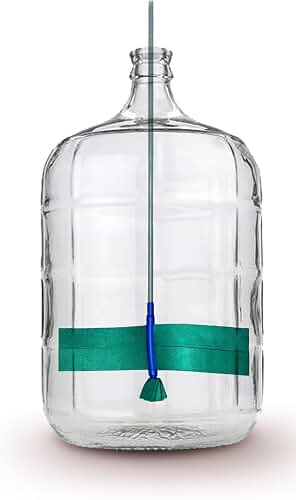
| Large glass fermenter | High-volume households, parties | 5 gal | $85+ |
> Editorial Tip: If you're a visual learner who likes to watch the SCOBY do its thing, go glass. If you live somewhere bright and sunny, ceramic protects against UV damage that can stress your culture.
The Painful Truth About Batch Brewing
Batch brewing kombucha is fine for a hobbyist making one gallon a week. But once my household started drinking three bottles a day, the calendar got ugly.
I had:
- A primary jar fermenting
- A secondary bottling cycle going
- The SCOBY sitting in a holding container during cleanup
- The risk that missing a brew day leaves you with a stretch of no kombucha until the next batch is ready
> Real-World Cost: In my first year of batch brewing, I lost two SCOBYs to suspected mold. Both during that vulnerable early phase. At roughly $15 a culture and weeks of lost brewing, that's not a small problem.
How Continuous Brewing Actually Works (The Science Made Simple)
The principle is elegant. A mature kombucha brew sits around pH 2.5 to 3.0. That acidity isn't just flavor — it's the SCOBY's biological defense system. Mold and unwanted bacteria literally cannot survive in it.
In a continuous setup, you never let the vessel's pH climb back up. You only remove about 25 to 30% of the volume at once, then refill with fresh sweet tea that gets diluted into the existing acidic reservoir.
It's like a sourdough starter for tea.

My Actual Weekly Rhythm
Here's the routine I've stuck to for eight months — and you can set your watch by it:
- Day 1 (Drawdown): Open the spigot and draw roughly 1 gallon into bottles for second fermentation.
- Same Day (Brew Day): Brew a gallon of sweet tea — 8 bags black tea, 1 cup sugar, cooled to room temp.
- Once Cooled (The Refill): Pour fresh sweet tea into the top of the vessel right through the SCOBY layer.
- Days 2 through 7 (Hands Off): Leave it completely alone. The fresh tea acidifies within 36 hours.
- Day 7 (Repeat): That's it. That's the whole job.
What You Actually Need to Buy
The Vessel: Your Most Important Decision
This is the heart of the system. You have two genuine options: a ceramic crock with a built-in spigot, or a glass jar where you've added a spigot kit.
I started with the TOMO Fermentation Crock with Weights. At 1.8 gallons usable capacity, it's perfectly sized for a 2-person household.
What I loved:
- The glaze is food-safe (I checked their lead/cadmium test docs before buying)
- The water-seal lid means no separate airlock needed
- The traditional ceramic look fits any kitchen aesthetic
- The opaque walls protect the SCOBY from light damage
- You cannot see inside without lifting the lid
- I had to learn to gauge fermentation by smell and taste alone
- After about a month, I genuinely stopped missing the visibility
For Anyone Wanting a Slightly More Refined Ceramic Setup
If budget allows and you want something that looks gorgeous on a kitchen counter, larger artisan crocks in the 2.5 to 5 gallon range offer beautiful aesthetics plus the headroom for a bigger SCOBY mother. The trade-off: more sweet tea per refill, and a heavier vessel to clean once or twice a year.
Common Mistakes That Sabotage Continuous Brews
After eight months and conversations with dozens of other continuous brewers in online forums, these are the patterns that wreck otherwise solid setups:
| Mistake | Why It Hurts | The Fix |
|---|---|---|
| Drawing too much at once | pH spikes, contamination risk soars | Stick to 25-30% per draw |
| Adding warm sweet tea | Shocks the SCOBY, can kill yeast | Cool completely to room temp first |
| Skipping the spigot flush | Builds up yeast plugs, slows pours | Run hot water through monthly |
| Forgetting to feed weekly | Culture starves, vinegar takes over | Set a calendar reminder |
| Using flavored or chamomile tea | Oils harm the SCOBY | Plain black or green tea only |
The Honest Pros and Cons
What's Genuinely Great
- Time freedom. Maybe 15 minutes per week, total.
- Flavor depth. Mature continuous brews develop layered, almost wine-like complexity.
- Contamination safety. That stable low pH is your best friend.
- No SCOBY hotel. Your culture has a permanent home.
- Scalability. Want more booch? Bigger vessel. Done.
What's Honestly Not
- Higher upfront cost. A good vessel runs $80 to $150.
- Less visual feedback (with ceramic vessels).
- Annual deep clean required — and the SCOBY needs a temporary home that day.
- Slightly less flavor variety between batches since the mother culture is constant.
Final Verdict: Is Continuous Brewing Right for You?
If you drink kombucha more than twice a week, value a low-maintenance routine, and want consistently delicious results with minimal contamination drama, continuous brewing is genuinely a quality-of-life upgrade.
If you brew once a month for fun and love the ritual of full batches, stick with batch brewing — it's a better fit for casual brewers.
But for everyone in between? After eight months and 14 gallons, I'd never go back. My morning glass tastes better, my counter is cleaner, and I haven't lost a SCOBY since the switch.
> The Bottom Line: A continuous brew system isn't a fancy upgrade. It's the way kombucha has been brewed for centuries, modernized with a spigot. It's reliable, beautiful, and produces booch that's genuinely better than what you can buy. Welcome to the dark side. We have tap kombucha.
Have questions about getting started? The BrewCrock Editorial Team reads every comment and we'd love to help troubleshoot your setup.
Key Takeaways
- Choosing the right continuous brew kombucha system means matching the key features to your specific needs and budget
- Read real customer reviews and check the return policy before you commit
- Also covers: continuous vs batch kombucha
- Also covers: continuous brewing setup
- Also covers: kombucha tap system
- Compare value across models — the priciest option is not always the best fit


